
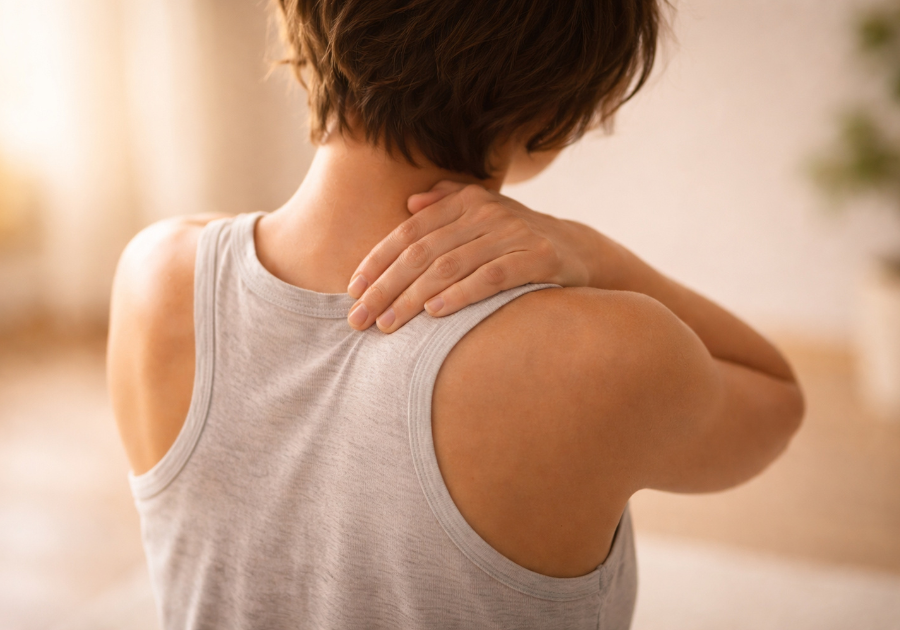
What if your body is asking for something else?
You’ve been stretching your *insert your tight spot here* for the past ten years, and it’s still tight. What gives?
And what popped into your mind first to fill in the blank above: Hamstrings? Shoulders and neck? Hip flexors? For me, it’s hip flexors, inner thighs, and IT bands. The trifecta that keeps on giving.
The truth is, if stretching alone was going to fix it, it probably would have by now.
I’m not here to tell you stretching is bad or that it doesn’t feel freaking amazing. It does. And there is a time and a place for it. But if you stretch, feel better for a little while, and then find yourself right back stretching the exact same spot tomorrow…maybe we need to get curious and start trying new things.
Not All Tightness Is the Same
Let’s clear something up before we get much farther. Nothing to do with the human body can be spoken about in absolutes.
For example:
You haven’t run in eighteen months, decide you’re apparently still 20, run five miles on Saturday, and wake up Sunday walking downstairs sideways because your calves are wrecked. But good news! You know exactly why you’re stiff. You asked your body to do something it hasn’t done in months. Going from zero to five miles probably wasn’t your best life choice, and now you’re feeling the consequences of that choice.
BUT what if your lower back has felt “tight” every single day for the last eight years? You stretch it every morning. It feels better. Then it’s “tight” and painful again by lunch.
That’s when I think it’s worth getting curious about what else your body might be asking for.
We call both of those things being tight, but they’re different experiences.
You did something new. You did more than usual. You spent six hours in the car. You slept in a weird position. You worked in the yard all weekend. It makes sense that your body feels different afterward.
That’s different from: “This spot ALWAYS feels tight.”
The latter is what this blog is about. If you find yourself shaking your head yes, keep reading. This is for you.
One important distinction before we keep going… We’re talking about familiar stiffness/tightness, not diagnosing persistent or worsening pain, an injury, numbness/tingling, significant weakness, etc. Those deserve appropriate medical evaluation. And this blog does not replace medical advice in any way.
Let’s Get to Know Your Tightness a Bit Better
How long have you felt tight or stiff: Weeks? Months? Years?
Can you even remember when it started?
What have you been doing about it to help: Stretching it? Foam rolling it? Massage gun? Massage? Maybe chiropractic, PT, or other bodywork?
Does it help?
For how long?
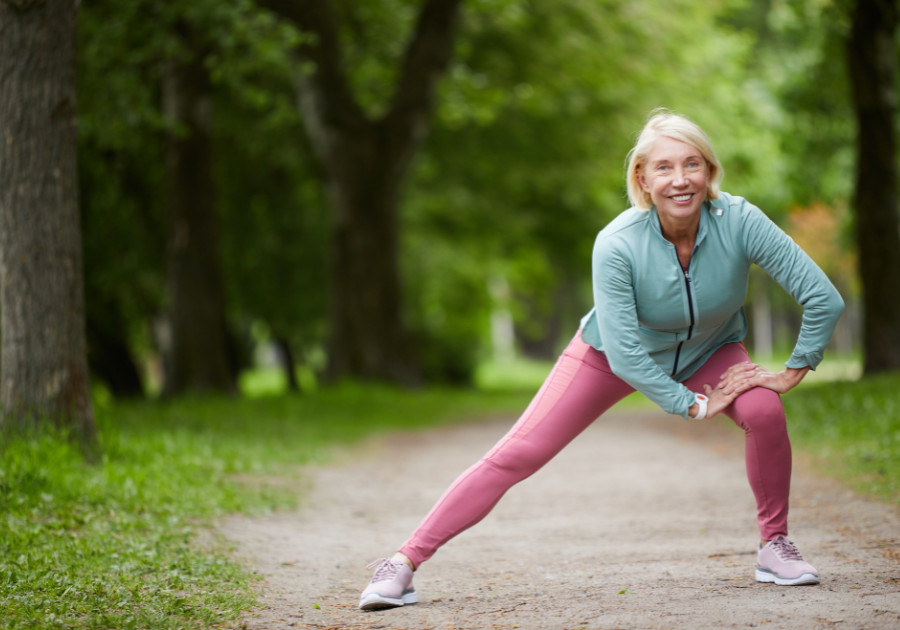
If Stretching Isn’t Fixing It, Why Does It Feel So Freakin’ Good?
To be fair, it feels good because it’s not that stretching is doing nothing. It feels good because it IS doing something.
Stretching can absolutely help you feel better and move more freely. But feeling better after you stretch doesn’t necessarily tell us why you keep feeling tight in the first place, or address everything that might be contributing to it.
That’s why you can stretch your hip flexors, feel like a million bucks, and wake up the next morning wondering if you ever stretched them at all.
And there isn’t one universal reason a body part keeps feeling tight. How much you move, how often you move, the positions you spend most of your day in, the ranges you rarely use, and how much strength and control you have in those ranges can all be part of the bigger picture.
Is It Really Just Because You’re Getting Older?
At some point we all start saying, “Well, I’m just getting older.” Our parents warned us, and now here we are.
Bodies do change as we age. Hormones change. Muscle and connective tissue change. Recovery can change. And while this blog isn’t about perimenopause, research shows that the hormonal shifts women experience in midlife can play a big role in how our bodies feel.
But you know what else changed between 20 and 50? How you spend your day!
Think about how much you moved when you were a kid. You sat on the floor. Got up. Squatted. Ran. Jumped. Climbed. Hung from things. Twisted. Rolled around. Sat in weird positions. Got back up. And then did it all again just for fun!
Somewhere along the way, movement stopped being part of our day and became something we had to schedule in. And still might skip.
We drive instead of walk. We sit to work. We order things straight to our door. We sit on furniture that means we rarely have to get all the way down to the floor and back up. We’ve spent decades making our lives easier and more convenient while unintentionally asking less and less of our bodies.
We’re animals too. Our bodies were made to move. But we’ve created a life where it’s entirely possible to go most of the day without asking them to do very much at all.
And before I lose my active people, I know. You work out. But let’s look at that for a second. Maybe you run, cycle, lift weights, play pickleball or take a fitness class several days a week. Great. Keep it up!
But there’s another piece of this that gets missed: it’s not only how much you move. It’s how many different ways you move. You can be incredibly active and still move your body in pretty predictable ways.
Runners spend a lot of time moving forward. So do cyclists. Lifters tend to repeat the same lifts and movement patterns. Golfers rotate a ton, but usually with the same lead side every time.
We get really good at the movements we practice over and over again. That’s not a bad thing. But what aren’t you asking your body to do anymore?
Meanwhile, there may be entire ranges, directions, and types of movement our bodies rarely see anymore. Your age changed. But so did the way you move. We tend to blame the first one without talking nearly enough about the second.
Maybe the answer isn’t just stretching the places that feel tight.
Maybe your body needs more movement options.
So What Now?
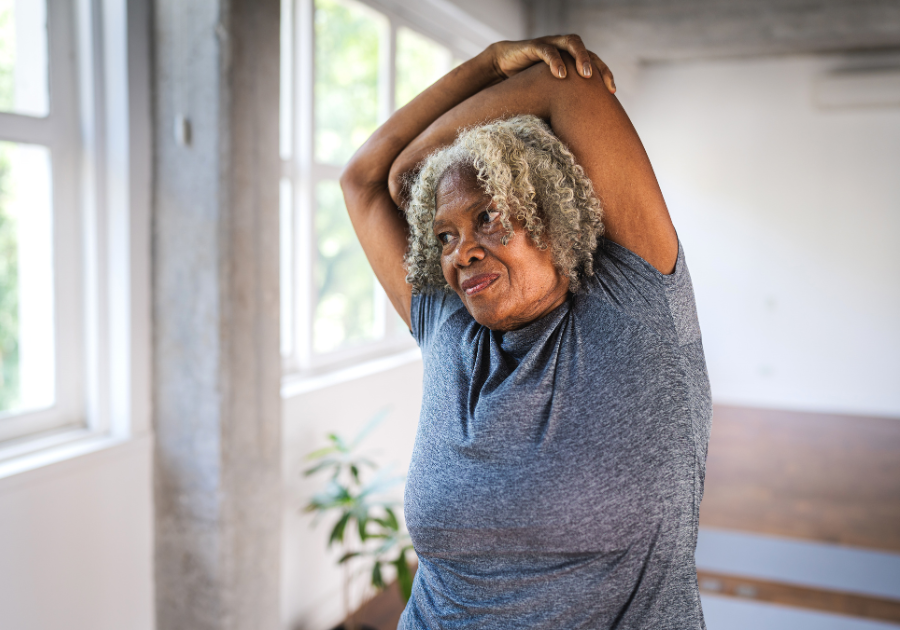
I’m not taking your stretching away. If it feels good, keep doing it.
But if you want something to change, maybe it’s time to stop only asking, “How can I make this feel less tight?”
Instead, what if you started asking your body to do more?
Move in directions you don’t normally move. Get on the floor. Get back up. Rotate. Reach. Push. Pull. Balance. Move your spine. Move your hips. Build strength in ranges you don’t use very often.
Basically, give your body more options.
Because being able to get into a range of motion is one thing.
Being strong enough and in control enough to actually use it is another.
Pilates Could Be the Thing You Didn’t Know You Needed
And this is where Pilates comes in.
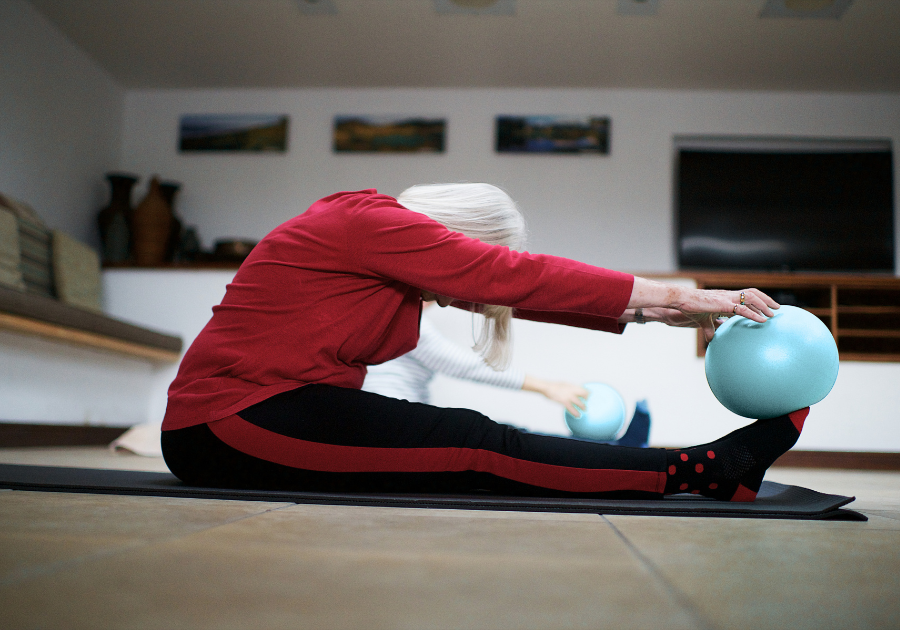
You don’t have to be flexible to start Pilates, and becoming more flexible isn’t the goal. Pilates asks your body to do a lot more than stretch.
Do you get some stretching while you build strength? Absolutely.
Do you feel better when you finish than when you started? Yes.
Do you feel like your whole body has been wrung out like a rag when you’re done? Also yes. 😂
You’re building strength while you move. You’re pushing and pulling. Flexing, extending, rotating and side bending. You’re moving your spine in ALL directions, learning how your arms, legs, and core work together, and exploring ranges of motion and movements you probably haven’t done in a while. You’re getting up and down on the floor, lying on your back, your belly, and your side. You’ll even eventually roll, kick your legs, and clap your feet!
Joseph Pilates called his book Return to Life Through Contrology, which pretty much says it all.
Pilates was always meant to support what you do outside the studio.
If you run, keep running. If you lift weights, please keep lifting weights. Ride your bike. Golf. Hike. Play pickleball. Do the things you love.
Pilates isn’t here to replace any of them. It can help build a body that’s better prepared to keep doing them, while helping you finally get out of the cycle of feeling like you have to stretch ten times a day to make it through.
But Don’t Just Take My Word for It
“Loved every minute of my first session! It’s such a great feeling when you sense the instructor understands what your body has been trying to tell you. Immediate and total confidence in Andrea’s expertise. Looking forward to our next meeting.” -Patricia A
“Pilates CURE has changed my life. Before joining, I was having neck pain. I did everything to try and fix it- acupuncture, chiropractor, massages, cupping, injections, new pillows and muscle relaxers. Nothing worked and within a couple months of starting Pilates, the pain was gone! “ -Angela V
If you’re tired of waking up feeling like it’s Groundhog Day and stretching the same tight spots all over again, maybe it’s time to try something different.
What have you got to lose? Pilates is a pretty great place to start.
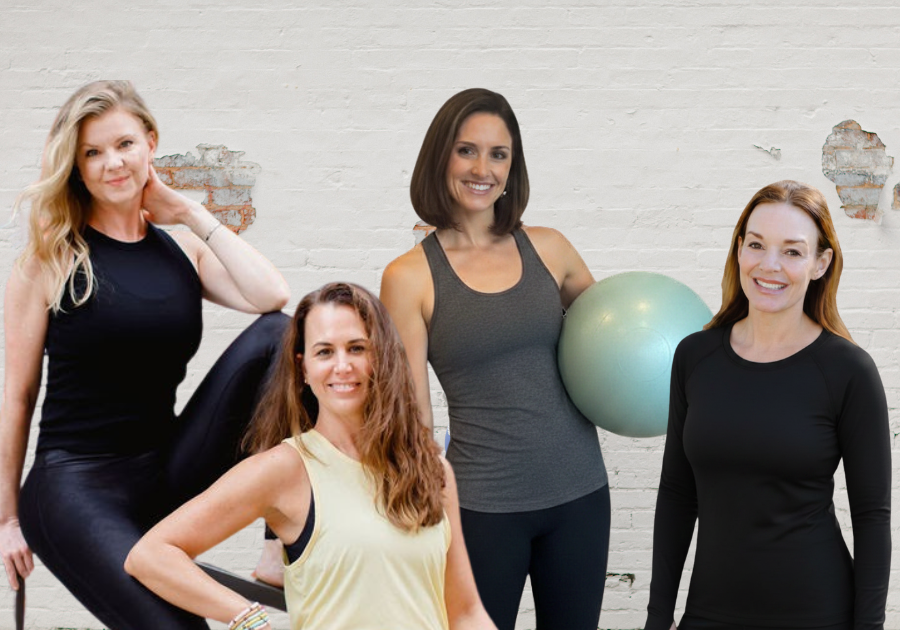
At The Pilates CURE, our team of dedicated instructors works with you to understand what your body needs so you can feel strong and supported every step of the way.
Want to Try It for Yourself?
I put together a free mat Pilates class you can do right at home. No Reformer. No Pilates experience needed. Just you and a mat.
It’s short enough to come back to regularly, even every day if you want to, because giving your body more movement doesn’t have to mean adding another hour-long workout to your life.
GET THE FREE MAT PILATES CLASS